Bring Out Their Best

Inspire a Coaching Culture in Your Workplace
Bring Out Their Best provides a practical framework for introducing coaching into your workplace

Bring Out Their Best challenges us all to create a vision of a culture that we want for our people and our organisations and it is a call to action to implement. A culture where people are using coaching skills, to engage with each other and build relationships and to achieve a high level of performance through the alignment of values, vision and commitment.

Sir John Whitmore
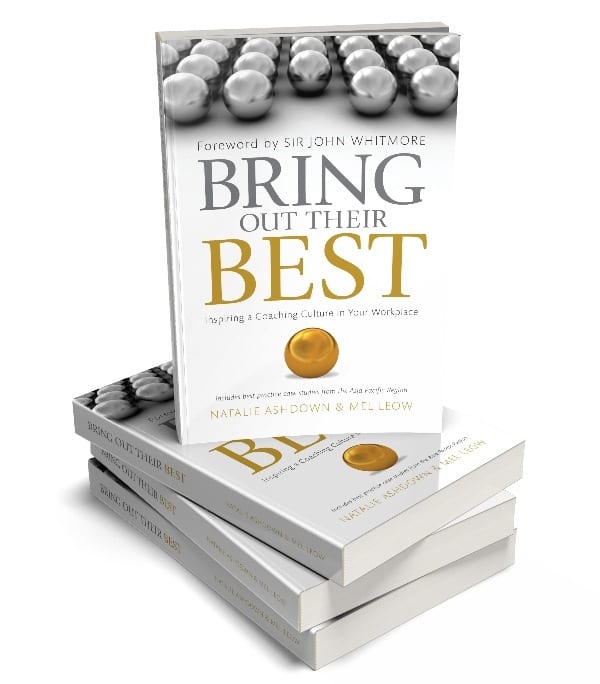
Bring Out Their Best Book Cover

Leaders today need a workforce that is aligned to company values and to deliver excellent customer service and increased work performance. In return, employees want to feel valued, recognised and appreciated for their effort.

Coaching in the workplace is fast being adopted by leaders in the region as a preferred method of supporting, encouraging, assisting, managing and bringing out the best in people.

Coaching Culture

This book, demonstrates that inspiring a Coaching Culture in your workplace can bring about this alignment.

Bring Out Their Best provides a practical framework for introducing coaching into your workplace and offers, for the first time, best practice case studies on the implementation of coaching culture from the Asia Pacific Region.

Case studies

The book features more than 40 case studies and stories from Asia Pacifi c’s best coaches and companies including GE (Oil & Gas), Nestlé Oceania, Mondelez International, Petronas, Maybank, Technip, Sunsuper, Super Cheap Auto Group, the City of Casey, Centrelink and The Reach Foundation.

This is a must-read book for human resources professionals, senior managers, team leaders and business owners who are wishing to maximise the potential of their people and it is the most up-to-date and relevant workplace resource for coaching in the Asia Pacific Region.

Authors:

Natalie Ashdown (CEO Open Door Coaching) and Mel Leow (Founder of APIC)
What’s inside Bring Out Their Best

bring out their best

Introduction

  • Practical ‘how to’ and ‘live stories’
  • Why is this book so important?
  • Understanding what you want!
  • Set your goals

Understanding coaching in the workplace

  • What is coaching?
  • How is coaching different from other techniques?
  • Wearing different hats
  • How coaching has emerged in Asia – interview with Foo See Luan
  • The Emergence of Coaching – interview with Sunita Chhibar
  • What is coaching being used for in the workplace?
  • The coaching relationship
  • Agreeing on the flow of information and confidentiality
  • The workplace coaching framework
  • Coaching principles
  • Effective communication and rapport
  • Effective questioning and listening
  • The GROW model
  • The tool kit

Understanding coaching culture

  • What is coaching culture?
  • Characteristics of a coaching culture
  • The triggers for introducing coaching culture
  • What are the results of a coaching culture?
  • The differences between what works and what doesn’t! – interview with Wendy Berry
  • How do you build a culture that you are proud of in the workplace? –  interview with Susan Braund
  • Lessons from a career in influencing culture – interview with Heather-Jane Gray
  • How do you build a culture that you are proud of in a workplace? – interview  with Akhil Shahani

Building your coaching tool kit

  • What sort of skills are you building in people?
    • Listening skills
    • When just listening works – interview with Mick Francis
    • Give them the fishing rod!
    • Shifting your mindset from telling to asking – by Lindsay Tighe           
  • Effective questioning skills
    • Open questions
    • Scaling questions
    • Questioning decisions
    • Laser questions
    • Questions to avoid
  • Great communication skills
    • The use of profiling tools
  • The top eight coaching models
    • The GROW model
    • Above the Line and Below the Line
    • Reframing
    • The conversation starter
    • WDEP model
    • EARS model
    • SMART model
    • NLP model for goal setting
    • Needs analysis
    • Happy Sad Happy

The coaching process

  • Identifying the need for coaching
    • Above the Line or resourceful states
    • Below the Line or less than resourceful states
  • Seeking permission
  • Creating the space for coaching
    • Preparing for a coaching session – the Coach
    • Preparing for the coaching session – the Coachee
  • Coaching parameters
  • The focus of the coaching session
    • Investing In their future – interview with Gary Lim
    • Summary

How to introduce a coaching culture

  • What does a coaching culture  look like?
    • Coaching culture map
    • Creating coaching culture
    • Flexibility of the framework
    • It’s not about textbooks
    • Cultures are fluid and changing
    • Enter at any point
    • Accounting for organisational maturity
    • Roll out the culture over time
    • Spread the word
    • Implementing a Coaching Culture in China – interview with Suhendra Cheng

Starting with the leaders

  • Where to start?
  • Coaching the leaders
    • The Leader and his responsibility for coaching culture – interview with Sunil Sethi
    • Starting with top management engagement – interview with Charlie Lang
    • The values of the leader – interview with Mick Francis
    • Opening up people’s minds – interview with Jean-Francois Cousin
  • When values are just a plaque on the wall
  • The champion who leads the coaching implementation
    • Moving away from ‘something wrong with you’
    • interview with Professor Sattar Bawany

Cascading down into the organisation

  • Translating down the values and visions
    • Sunsuper – cascading leadership down through the organisation
    •  interview with Leisa Bowness
  • The champions from Super Cheap Auto Group
    • interview with Kirsty Lynagh and Jane Anderson
  • What range of coaching occurs across an organisation?
  • Decisions to make prior to rollout!
    • How do you match the coach to the coachee?
    • What should you be looking for in a coach?
    • Do you use internal coaches or external coaches?
    • A guide to using executive coaching – best practice wisdom from
      • HR professionals  by Dr Gavin Dagley
    • Panel versus a single company
    • What about qualifications and credentials?
    • Face-to-face or On-Line Delivery?
    • Agreeing the coaching methodology or the tool kit
    • Nominating participants on the coaching programs
  • Coaching teams in the workplace
    • Leading high-performance teams – interview with Andrew Jobling
    • Coaching teams in the workplace and learning from sport
      • interview with Emma Doyle
    • Coaching a team through significant organisational change
      •  interview with Gerry Mellas

Building coaching into the HR processes

  • What role does HR play in developing a coaching culture  in the workplace?
    • ‘Any coaching program will fail without HR input!’
  • Building coaching into the HR artefacts
    • Coaching as a leadership competency
    • Coaching as part of leadership development programs
    • Dedicating internal resources to coaching
    • HR supporting the business units
    • HR leaders role in influencing coaching culture – interview with Dr Wendy Liow
    • Blending coaching with the daily HR function – interview with Alison Nolan

Measuring, monitoring and the feedback loop

  • How do you monitor coaching in the workplace?
    • Agreement on the feedback and reporting
  • How to prove the value of coaching
    • Return on Investment (ROI)
    • The difference between training and coaching
    • Julie’s beginner’s luck
    • The Leader as Coach program – interview with Michael Fahie

Measuring, monitoring and the feedback loop

  • Toxic workplaces
    • Transforming toxic workplaces – interview with Sally Parrish           
    • When values are not matched – interview with Angela Spaxman               
    • What role does coaching play in extreme work environments
      • or high pressured situations? – interview with John Rietveld
    • When time for coaching has passed – interview with Tom Pagonis and Liz Kelly       
  • One step at a time!
    • How do you champion coaching when the environment
      • is not really ready? – interview with Paula Jones-Hunt
    • Influencing one coaching question at a time – interview with Sulynn Choong

Bringing it all together – best practice
  • Rolling out the program over time
    • Spread the word
  • When it all comes together
    • Best practice implementation – interview with Jill McGinn           
    • Centrelink: Using the change model in coaching
    • How the City of Casey shines – interview with Richard Frazer   
    • An Insight into a ‘Master Plan’ at Maybank – interview with Nora Manaf                         
    • Lessons from Coaching at Petronas – interview with Simon Lee           
    • Best Practice Implementation at Nestlé Oceania – interview with Garth Byrne                
    • A unique insight from within one of the world’s best organisations –
      • GE (Oil and Gas) – interview with Mohd Azri
  • Hot topics in coaching in the workplace
  • The future is in good hands
    • The Reach Foundation: introducing a coaching culture to a Y-gen workplace
    • interview with Jen Brice
  • The baby boomers
    • Work-life balancing or juggling
    • Exposing the myths about work life balance – interview with Sean Richardson, PhD        
    • Encouraging Leaders to just “BE”! – interview with Malti Bhojwani 
  • Healthy leaders lead to healthy organisations
    • Healthy workplaces – the biggest issue in leadership – Terry Bahat           
  • Qualifications,  credentials and supervision
  • Cross-cultural coaching
  • Conclusion
  • Useful websites  and reading

What you will learn

Coaching Culture

The Coaching Relationship

The Coaching Culture Map

Powerful case studies

Workplace Coaching Framework

Dynamic coaching models and tools

The 7-Step Coaching Process

How to introduce a Coaching Culture in the workplace

‘Coaching is unlocking a person’s potential to maximise his or her own performance. It is helping them to learn rather than teaching them.’

“A coaching culture all starts with the leader’s willingness to engage in the coaching relationship and to undertake self-reflection, to develop themselves and others.”

“Organisations need coaching cultures in boom or recession economies. it’s important to ensure that an organisation’s culture is resilient and sustainable over time – especially when change will always be constant.”

‘The highest reward from your coaching is not what you get from it, but what you become by it. It isn’t what you know that finally counts – it is who you are being.’

“Coaching techniques will change your life and the lives of those you engage, whether it be in a personal or professional environment.”

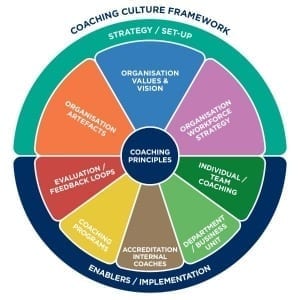
Coaching Culture Framework to Bring Out Their Best

WORLD CLASS CASE STUDIES