
Ethics in coaching #2
The instant ‘fail’ at any level of ICF credential
In the assessment of a coaching demonstration (known as the ICF Performance Evaluation) the competency of ‘Demonstrates Ethical Practice’ clearly states what a ‘fail’ would look like. That is, where a credential at any level, ACC, PPC, MCC would be denied.
With this in mind, we dig into our theme of exploring the ICF Core Competencies, specifically around Competency 1: Demonstrates Ethical Practice. This gives us an opportunity to reflect on ourselves as coaches and on our workplace coaching practice.
Listen to the Coaching Cafe podcasts


Demonstrates Ethical Practice
In an extremely important move, when the ICF Core Competencies were updated in 2019, Demonstrates Ethical Practice was included as Competency #1. Rather than being a ‘given’ after agreeing to the Code of Ethics, the ICF built into our professional practice, this competency. In addition, from 1st August 2022, the updated Core Competencies are integrated into the Credentialing Performance Evaluation and written exam requirements. Importantly, this includes Open Door’s coaching programs.
The definition of Demonstrates Ethical Practice is as follows: Understands and consistently applies coaching ethics and standards of coaching.
- Demonstrates personal integrity and honesty in interactions with clients, sponsors and relevant stakeholders;
- In addition, is sensitive to clients’ identity, environment, experiences, values and beliefs;
- Furthermore, uses language appropriate and respectful to clients, sponsors and relevant stakeholders;
- Most importantly, abides by the ICF Code of Ethics and upholds the Core Values;
- Also, maintains confidentiality with client information per stakeholder agreements and pertinent laws;
- In addition, maintains the distinctions between coaching, consulting, psychotherapy and other support professions;
- And refers clients to other support professionals, as appropriate.

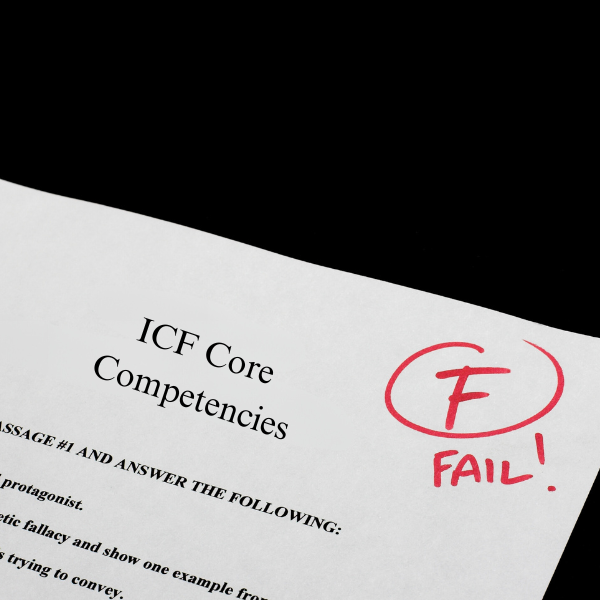
The instant fail in a performance evaluation
We tap into Brigitte’s knowledge and experience as an Assessor at the ICF PCC level for nearly 20 years during the webinar.
In addition, we can tell you that at any level, if a coach does the following, they would be denied a credential:
- First and foremost, committing a clear violation of the Code of Ethics
- Telling the client what to do or how to do it (consulting mode)
- Or if the conversation is based primarily in the past, particularly the emotional past (therapeutic mode).
- Alternatively, the coach almost exclusively gives advice or indicates that a particular answer chosen by the coach is what the client should do
FREE Coaching Cafe Webinar
Every week our team of experts present “Coaching Cafe” webinar with topics for Managers, Leaders, Business Owners, and everyone who wants to be a better workplace coach, leading their teams to higher productivity, better outcomes and a happier, healthier workplace.
Join us this Friday for FREE. Register now.





Stay Up to Date
We Have Worked With…